


Dog Harnesses - The Breakdown
With all the different style harnesses available to you and your dog how do you know which one is best? Join me as I go over the options available and I may even mention which ones are my favorite and not so favorite.
If your dog PULLS on leash and you want something to help you will want to watch this!
There are many different style harnesses available to you and your dog. How do you know which is the best for you and your dog? In this live video I mention which ones are my favorite and not so favorite.
If your dog PULLS on leash you will want to watch this!
Leash Walking Tips
When you have a dog that pulls how the heck do you get them out of the situation?
Here are a couple of techniques to get your dog’s attention back on you so you can move away from the temptation.


Now and Then: A Reflection
An honest reflection of what life is like and how dog training was before I had kids.
Everything Changes With Time
I have spent nearly 15 years professionally dog training and it has changed just as much as I have. Why do I say “professionally training”? I say it because I think there is a difference. I was “training” as long as I have had dogs, which is as long as I can remember, which puts me up to 30+ years training. My training at 6, 10, or even 15 years old is substantially different than my years leading up to professional training. Like kids, it’s fun and you do it but you don’t understand the behavioral component and complete consequences to the training you are doing. As you get older you begin to educate yourself and learn as much as you can. Before I started my professional career I raised 3 dogs for Guiding Eyes for the Blind. During the period in which I was involved they did things differently than they do now. The organization used the traditional methods of choke chain collars and modeling or molding the dog into positions by placing their hands on the dog and forcing them into position, such as sit or down. When I was a kid, this was the way to train a dog. I will say our dogs had lots of acreage and freedom to roam so these traditional methods weren’t really implemented much in the realm of leash work. Even as a kid I preferred to use food to train tricks with my dogs. I spent a large part of my early training career as a college student with what seems like endless amount of time to dedicate to my dog. I worked at Green Acres Kennel where my dog, Scout, came to work with me daily. Scout was our “fur baby”. He went with me and my now husband, Brock, everywhere. Instead of kids, everyone had dogs or were dog friendly. Scout was well socialized, well trained and a great young dog. He practically received 24/7 training which resulted in a well rounded, confident dog (mostly), trained dog.
Then There Was Three
Now fast forward 11 years and he is rusty on his training, older, and pushy. We have since added two more Labradors to our mix. Scout, Henry (7 years), and Tripp (2 years) and TWO kids, 3.5 year old, Fiona, and 1 year old, Delaney. To say dog’s personality and temperament is a huge factor in training can’t be emphasized enough. Henry is a great indoor dog. He is essentially a teddy bear dog who doesn’t really do anything but lay around, snuggle and eat. He doesn’t move fast, doesn’t jump and is the dog everyone says they want when they meet our dog posse. He was a rescue at 2 days old and I didn’t really invest much energy into training him because of how calm and relaxed he was. We did a few training classes here and there but because of his mellow yellow demeanor the only behavior that we really worked on was leave it. He had a bit of a pica issue. I blame his congenital defect, cleft palate. He was around a couple years old before the first child appeared in the picture.
After about 6 months to a year, Scout’s behaviors started to crumble. There was no follow through or rewards to reinforce his existing behavior so the “go to your beds” and “leave its” fell apart. It isn’t until now that I reflect back and say that my Post Partum hormones really effected my relationship with the dogs for a period of time. They couldn’t breath, clean themselves or walk across the floor without my blood boiling! Often as dog trainers we put so much emphasis on preparing the dog for when the baby comes that we, as trainers, can forget to focus on what it will do to the relationship between the new parents and the dogs. I was prepared at the time for my dogs to welcome our baby. They were well socialized with children of all ages, infant, toddler, kids, pre-teen, I had no concerns. I was completely shocked and bothered by the fact that for a period of time, I didn’t like my dogs, like at all, they could do nothing right. We survived and recovered all in one piece. But it gave me an eye opening experience as to how and why so many dogs get rehomed after the baby comes.
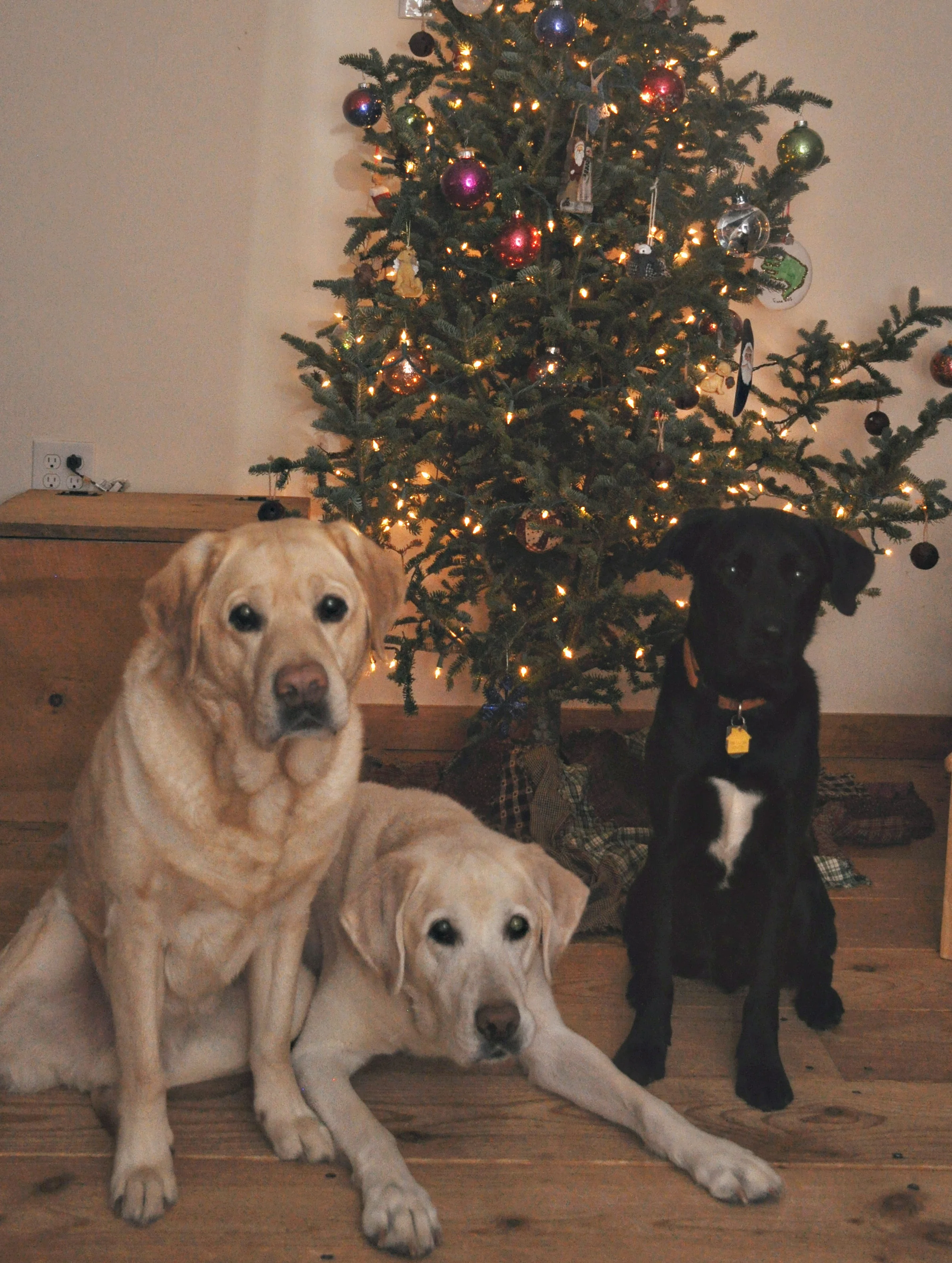
Left to Right: Henry, Scout, Tripp
Then I rescued another lab, Tripp, 2 years or so later. It wasn’t long after getting Tripp I learned I was pregnant with my second child, 4 weeks later to be exact. Tripp was an incredibly exuberant puppy who was in to everything, he was ALL PUPPY! I thought for sure my relationship with my dogs was going to spiral downward again like the last time. I mentally prepared myself this time for the possibility that I would dislike my dogs again. I worked on refreshing a few staple behaviors and was pleasantly surprised to find that there wasn’t much change after coming home from the hospital. There are some people that are mentally strong, physically organized, and capable human beings that can do puppies and infants/toddlers at the same time and make it look like a breeze. I have learned in my training, even before I experienced it myself, that these people are very few and far between.
Finding The Balance
When forced to choose between your dog or your child it is usually the training of the dog that suffers. Your energy and the time goes into molding and training your new, little, human being. It is why you often see dogs in the shelter at such young ages, around 6 months to a year. It is the most challenging time to have a dog. They are in the full swing of “adolescence”. When I found myself in the situation where I had a baby and a very young dog I found ways to make it work. I utilized, but didn’t abuse, the crate training I did with my dogs, especially Tripp, so that I could maintain my sanity. There were times, actually many times, when Tripp was in his adolescence that I threatened to rehome him, give him to my in-laws or anyone that really seemed to want him. If anyone took my bait, however, I found my insides backtracking fast and knew it wasn’t something I really could do. Once I had that realization, I set forth to invest more time and energy into my dogs. A year and a half and I almost feel like a capable human being/trainer within my own home again. I didn’t hire a nanny and my mother took ill shortly after having my second child . She was struct with a very, very serious illness which took up the majority of a year. She’d often be my outlet for “breaks” while Brock worked long hours. We pioneered through. Now, as I write this, I listen to Fiona laughing and giggling as she plays with Tripp and Scout, using the training cues she has heard me use countless times.

Left: Pre-kids, Scout and Henry and visitor dog, Shirley
Right: Scout, Henry, Tripp and daughters Fiona and Delaney accompanying me on a walk while working on recalls.
Reflection
I am proud to reflect back and see the journey I have been on as a dog trainer. It’s important to look for a trainer with a training history. One you can relate to. I’ve been through a lot with my dogs. The, my dog is my fur baby stage, to the my dogs take the back burner because I had a kid stage, as well as I can train my dogs while I have kids stage. I’m still work in progress to the train my dogs and kids stage but we’re getting there and I find a lot of times it’s easiest to just include the kids. I don’t have a type A personality. I do feel i can multitask but I am also a person that does self care too and part of my self care is not always spending time training my dogs or being with my kids. You will find some trainers who make it look very easy to balance training their dog and having a toddler and/or infant but for me it was a challenge and not realistic. Moving forward I will learn from my past experiences and therefore making me a better training. Here’s to that was Then and this is my Now!

Why be certified?
There is something more to just calling yourself a dog trainer. Although no formal licensing is required like Veterinarians, Dr.s, or even Electricians there are credentials you should look for to know you are finding a trainer with knowledge and experience in the field. Do you know what you should look for?
Did you know there is no official means of regulating the dog training industry? Did you know that means anyone could wake up today and say they are going to become a dog trainer? There is a lot of advice available out there (internet, neighbor, stranger in the store) some good and a lot bad and everyone has their input on how you should train a dog. Just ask the Facebook community a dog training question and everyone has an answer, again some good and a lot not so good. Ask an electrical question to the same Facebook community and you will more likely be pointed in the direction of a master electrician and have far fewer “tips” offered up.

Certification CouncilFor Professional Dog Trainers
There are many certifications for dog trainers but they are special to the particular school where you have obtained them from. I am CPDT-ka certified which stands for Certified Professional Dog Trainer -knowledge assessed. Why does that matter? It’s because of what I had to do to become certified and what I have to do to maintain it. I had to acquire 300 hours of training within three years to be able to sit for an exam. Topics of the test covered a broad range of learning theory, husbandry, dog training techniques and instruction. I also needed to send in referrals from a veterinarian and client.
“The Certification Council for Professional Dog Trainers (http://www.ccpdt.org/), established in 2001, is the leading independent certifying organization for the dog training profession. The CCPDT is the leader in the development of rigorous exams to demonstrate mastery of humane, science-based dog training practices.”

I’ve been professionally training for almost 15 years and have been certified since 2011. To maintain my certification I must acquire a minimum of 36 hours of CEUs and recertify every 3 years. Having to obtain the units means I’m staying up to date on the most recent scientific findings as it pertains to dog training.
I put this out there so you can be aware of who you are seeking out to train your dog. Like I said there are many certifications available to dog trainers but not all of them are created equal.
Just because I painted the entire interior of our newly constructed house doesn’t make me a professional painter. Anyone can call themselves a dog trainer but do your research, ask questions, and get the best for you and your dog.
Can You Handle It?
Being able to bathe your dog or groom them is one thing that goes untrained. Taking time to teach your dog to like being handled will make your life easier as well as anyone who has to work with him. Here are a few tips to make that possible.
Different dogs come with a different grooming requirements. Your dog may have the short coat like a Boxer, a long thick coat like the Samoyed or curly like the Poodle. Some need the occasional brushing, while others need it daily. Others frequent the groomer every 6 weeks and all dogs need their toe nails trimmed on a regular basis. Whether you do it yourself or put it upon someone else, all dogs should learn to love to be handled.

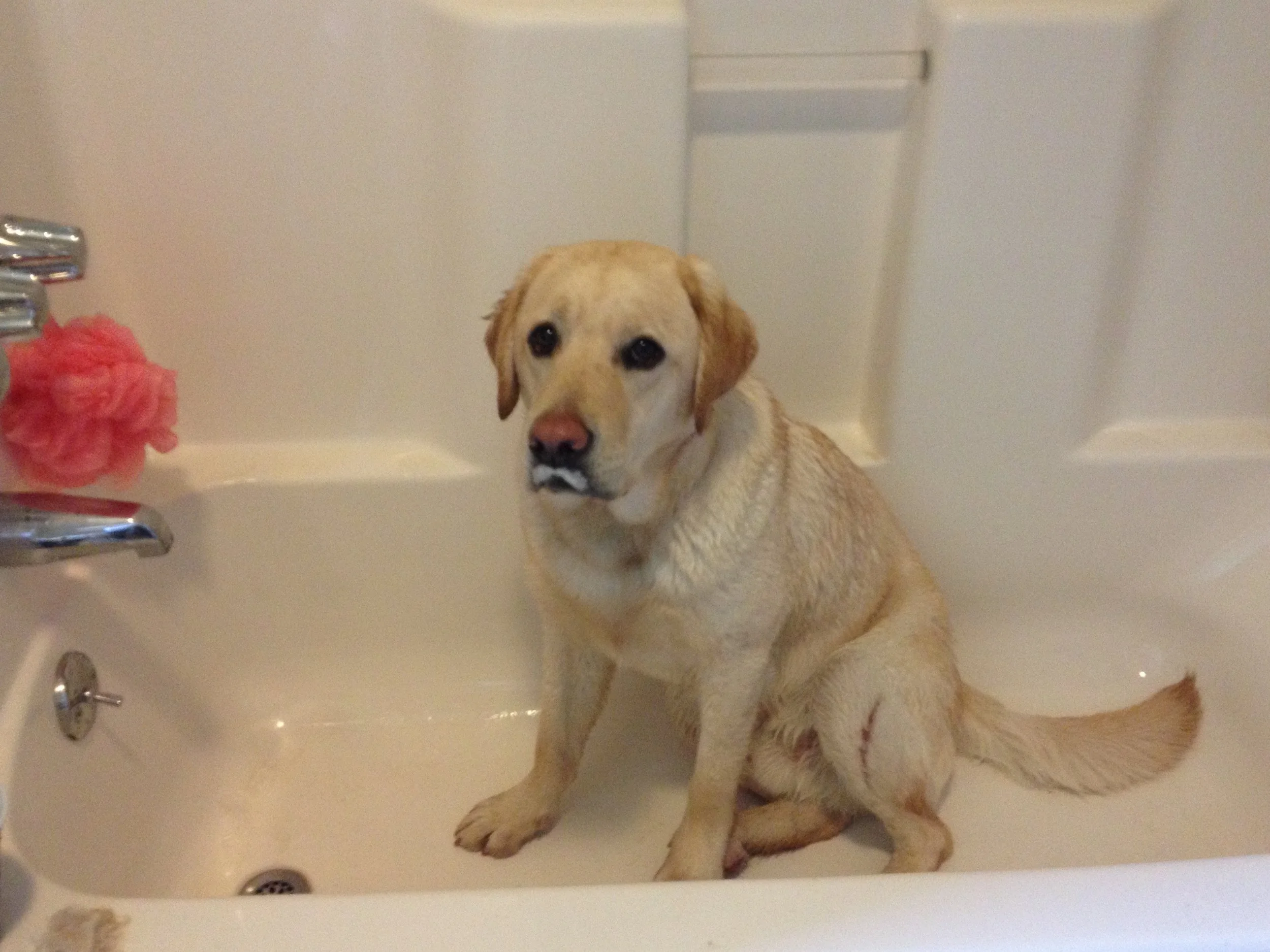
Henry enjoys bath time because he has been heavily reinforced for staying in there. Although he always looks sad, his bath time was over and I couldn’t get him to stay out of the tub long enough to dry off.
Start Now!
It is never too late to begin conditioning your dog to like to be handled. If you have just brought home your 8 week old puppy, start now! If you have rescued an older dog, start now! There is no excuse not to. The only difference is you might have to move slower with an older dog that has developed some negative associations to how they have been handled, or not handled, in the past.
Keep it Short and Sweet
No one says you have to trim the nails on all four feet in one day. If you take your dog to the Veterinarian or the Groomers for nail trims you should be working on counter-conditioning between each visit. Spend 1 minute a couple times a day working on different parts of your dog’s body.
Counter-Conditioning
Pair the handling of your dog’s feet, ears, tail, mouth, collar, brushing, sound of the hair clippers etc. with a tasty morsel of food. This process starts to change your dog’s emotion about the situation and learn that a nail trimmed equals a piece of steak or which every part of handling you are working on. You are always going to work at the comfort level of your dog or just a fraction above that comfort zone without eliciting a negative response from your dog. The point of counter-conditioning is to get it so that your dog loves to be handled.
5 Toes, 4 Feet, 2 Ears
When working on counter-conditioning be absolutely certain that you touch all 4 feet, each toe on every foot, and both ears. Dogs don’t generalize well so just because they are good with the front feet doesn’t mean they will be good about the back or the left ear over the right.
Don’t wait until there is a problem to begin working on handling with your dog. Prevention is always easier than the treatment. If your dog enjoys having his ears cleaned and handled it will make applying medication that much easier if he ever develops an ear infection in the future. If your dog struggles now and you have to absolutely do treatment beyond where you are at with conditioning, do your best to keep it positive and be that much more diligent about working on your handling exercises to make it easier for the next time.

Skunk Funk
We all know the distinct smell of a skunk but what do you use when your dog is sprayed by one? Here is a tried and true recipe for removing the skunk funk!
First day of spring! It’s still a little chilly in the mornings here in Maine but looking forward to when that’s over and you can go out the door at sunrise with the dogs without wearing a puffy winter coat. We have welcomed a couple warm spring like mornings already here in Maine. But with warm spring like weather comes the inevitable. A couple mornings when I have gone out with the dogs I was hit with the distinct, pungent, skunk smell. It got me thinking, I better make sure I have all the supplies needed in the event we actually meet the skunk. This DIY recipe is the best one out there.
In an OPEN container mix the following:
1 quart of 3 percent hydrogen peroxide (check expiration date)
1/4 cup of baking soda
1 teaspoon of a liquid dish detergent, such as Dawn
Rub into the dog’s fur focusing on the areas where it is the strongest. Allow to sit for a few minutes and then rinse out. Repeat as needed to completely remove the smell. DO NOT store this solution, discard after use as the reaction between the peroxide and soda can cause an explosion if put in a closed container.
Hopefully we won’t have to use this but it’s always good to keep it all on hand.

No Restraint Toe Nail Trims
Toe nail trims don’t have to be stressful for you or for the dog. Follow this tasteful tip and you’ll be on your way to easy toe nail trims with a little practice.
If you own a dog then you probably have had to trim their toenails or pay someone to do it for you. Trimming dog’s toenails isn’t for everyone, even the dog. Some dogs have had such an unpleasant experience with their feet being touched or toenails trimmed that they flee the moment the clippers are brought out or require an extra person to restrain them, the use of a muzzle or in a few cases sedation. If this describes your dog, it won’t get better on its own. In fact over time, it usually gets worse. But there is hope!
Handling your dog’s feet and pairing that and toe nail trimming with something positive, think a very yummy, stinky, treat, is key in creating a lifelong, stress free situation for you and your dog. In the following video I work with Tripp to create calmness while trimming his (black) toenails. I take my time when it comes to trimming the nails so I work with my dogs to heavily reinforce them being calm and still. To see how I handle things when Tripp gets a little twitchy or excited you’ll want to watch. This video does not go into depth on how to approach the actual cutting of the nail but rather how to make it so your dog associates the clippers, feet handling and the trimming of the nail with something positive. In the end I offer up tips on how to take it even slower if your dog is so distraught or difficult when it comes time for his pedicure.
Uploaded by Erin Bessey - CPDT-KA on 2019-02-13.
A no restraint way to trim your dog’s toe nails.

When Your Dog Won't Come
When your dog won’t come what do you do? Learn three tips that can help you build a better recall today.
In my classes I like to get a sense of what my student’s goals are with their dogs. After I have everyone introduce themselves I ask: What are your goals? I can almost always expect at least 1 if not all of the students to include coming when called as one of their goals or something similar like having a dog who is reliable off leash. It makes sense. It is an important and life saving behavior. Behavior is the key word in that last sentence. By definition behavior is: the way in which an animal or person acts in response to a particular situation or stimulus.

There is a misconception that dogs understand the word “Come” and should appear as soon as they hear it. In truth, we must train this behavior just like we train our dogs to sit or roll over.
In my experience, most owners have not formally trained a “Come” behavior. When the puppy is around 8 weeks to 5 months old they prefer to be around their human. When we use come during this period of time it is highly probable that the puppy will come because they want to be near people, they are dependent on them. This gives the human a false sense of security that their puppy actually knows how to come but this is not true. Once the pup reaches adolescence, it becomes clear that the dog does not know what “Come” means because they are no longer returning to their person. There is a misconception that dogs understand the word “Come” and should appear as soon as they hear it. In truth, we must train this behavior just like we train our dogs to sit or roll over. What do you do when your dog won’t come? If you are struggling with teaching “Come” here are 3 things to get your started on a reliable recall.
1. Add value to the Word
With the dog on a 6 ft leash, say the word “Come” and start to back up. When the dog begins to move with you, say Yes! and continue to praise them until they reach you. Then give them a high value reward such as chicken, freeze dried liver, or cheese (the stinkier the reward, the better). Do not use “Come” outside of this practice. It is important to do this exercise for at least a week, if not more, multiple times a day in different locations. Our goal with this is to have the dog develop muscle memory. that the word come means move towards the handler.
2. Never Punish
Never punish the dog for returning if it took a long time or if they didn’t come immediately. Take it as a learning experience as to why the dog didn’t come back. Was the dog placed in a situation he wasn’t ready for? The key to getting a reliable recall is to always keep it positive and enjoyable from the dog’s perspective. Don’t call the dog from play or something fun to snap the leash on the collar and make it end. Even if you give the high value reward it may be overshadowed by the fact that lots of fun just stopped.

3. Increase Distractions Gradually
Once the word has been charged it is time to gradually add distractions, indoors first, and then outdoors keeping the dog on a leash. Gradually increase the length of the leash as your dog is successful. I have leashes in lengths of 10’, 30’, and 40’. A longer leash provides the dog with some freedom while preventing them from running away and ruining all the hard work you’ve invested. “Come” should not be used unless you are willing to put $100 down on the behavior, that the dog will come. If you aren’t willing to make that wager then the distraction is too great and the word should not be used. The last thing you want is to use “Come” and then have your dog not come. If you end up with the dog not returning, you are teaching him that “Come” only means appear when he feels like it or when there isn’t anything more tempting or better to do.
These are just a few of the steps to take to have your dog come. In Bessey’s Positive Paws classes we also includes fun games and more tips to strengthen the recall. Taking the time to build a reliable recall will allow some dogs to have more freedom off leash in the future.
Don’t want to miss out on other helpful articles? Subscribe or like our Facebook page.
HouseTraining Not HouseBreaking
Housetraining your puppy doesn't have to be hard. In fact, following these simple tips will get you on the fast path to a potty trained puppy!
When you bring a new dog into your house whether it is a puppy or an older dog you should start off with the basics to house-training until you know what your dog is capable of it. A puppy biologically can not hold his bladder for more than a couple hours. They should be taken out often especially following a nap, eating, drinking or playing. An older dog should be treated the same until you know if they have been properly house trained.

Any time a dog has an opportunity to eliminate in the house he is getting reinforced for it so we need to teach him that going outside is better and manage the situations until he is reliable. Here are 5 things you can do to help successfully train your dog to eliminate outside.
Supervise. Keep your puppy under close supervision during the early stages of housetraining. That means using a tether or leash to keep your puppy near you or a use a crate if you are unable to actively supervise. Keep track of how long it has been since they last went outside to potty.
Pick a potty area that you want your dog to go to and take them there each time you take them out. That way they will know what is expected of them when you take them to that area.
Go outside with your dog so that you know they have completely eliminated. Don’t watch from a window, but put them on leash and go to their potty area and give them 5-10 minutes to eliminate. Refrain from walking around the yard as this often leads to distraction and forgetting why they are out there.
Treat them within 5 seconds after they have eliminated. Not only do they feel relief from emptying their bladder but now they get a tasty treat as well. This makes going outside doubly rewarding.
Put it on cue. As your dog is actively going to the bathroom you can say “Go Potty” or “Get Busy” or whatever phrase you like. This will be useful when you need your dog to eliminate quickly so you can load them into the car, leaving for work or if you are traveling with them.
Follow these simple steps and you will be on the way to a house trained dog in no time. It takes diligence on the family’s part to prevent any accidents in the house. If your dog does have an accident here are some things you should try:
1. Interrupt. If you catch your dog in the act of eliminating make a noise to interrupt the behavior. Clapping your hands or a gasp will often do the trick. Scoop them up or lead them out to their potty area and allow them to finish going to the bathroom and follow the above tips.
2. Use an enzymatic cleaner to clean up after the accident. Avoid ammonia based products as this eliminates the odor for humans but not for our pets.
3. Don’t punish your dog if you come upon the accident after the fact. Punishing your dog during or after act of eliminating only teaches them that you are dangerous and can make getting them to go to the bathroom in front of you a problem.
4. Unless you plan to use them for life, don’t use puppy pee pads. The use of these will often slow your house training progress by confusing your dog. As far as they are concerned going to the bathroom inside or out is acceptable. If you only want your dog to go outside toss the pee pads.
5. Make note of why the accident happened, (not paying attention, went too long between potty breaks, possible medical condition, like a urinary tract infection, etc.) and commit to doing better next time.
If you are following all of these guidelines but it still seems your puppy isn't catching on or going every 20 minutes, it might be worth consulting your Veterinarian and ruling out a urinary tract infection.

Importance of Socialization
Socialization is the most important thing you can do for your new puppy, more important than teaching the basic behaviors. It builds a stable, confident dog ready to take on the world. Keep reading for a list of places and things to socialize your dog to.
Have you ever seen the young adult dog who acts terrified, almost like they'd been abused in some form, as people often assume? While that does sometimes happen more likely the cause of the fearful dog is lack of socialization during the critical period of development. In the first 8 weeks of their lives, breeders or the responsible caretaker of the puppy should be providing the litter with enrichment activities such as different under footings, noises, and people. Once you come to own your puppy it is your job to continue to positively expose your dog and socialize them to the world. It's more than being around other dogs it's different places, people and things to help build and create a confident, stable, adult dog. This is more important than teaching your dog any basic commands. You can always do that but you only have a short window to socialize.
Here is a list of ideas of ways to socialize your puppy.

Different Types of People - Your puppy needs to be socialized with at least 100 different people before they are 16-20 weeks old. If you don’t have access to that many people, consider hanging out with your puppy at a busy shopping area. You need to do that more than one time. Make field trips fun and keep them short. Not every trip needs to result in greeting every person. Calm behavior should be encouraged during these interactions.
- Men (men with beards, men without beards, men with beards that wear hats, wearing hats and sunglasses, etc.)
- Women
- Boys
- Girls
- Shuffling people
- Slouched people
- People with glasses
- People on crutches
- People with walking sticks
- People with walking frames
- People walking strangely
- Babies
- Parties
- People on roller blades
- Joggers
- Wheelchairs
- Heavy people
- Thin people
- Tall people
- Short people
- People costumes
- People in big coats
- People with beards
- People with sunglasses
- People of all races
- Bald people
- People exercising (running, jogging, star jumps, etc)
- Children and babies (See NOTE)
- Dancing people
- Busking people
Note: It is really important that your puppy interacts with kids of different ages. Infants are very different than a crawling or semi walking baby. Most dogs are fine with infants but when a baby become a little more mobile is when most families see signs of growling and other aggressive displays. Please go out of your way to find children who will follow direction well and not hurt or scare your pup by accident.
Different surfaces
- Bean bags
- Tile floors
- Wood Floors
- Bubble wrap
- Different walking surfaces
- Wobbly bridges
- Heights
- Agility Equipment
- Gravel
- White floors
- Child’s plastic sled
- Leaves
- Metal street grates
- Plastic tarp
- Cookie tin
- Walk through a ladder on the ground
- Tippy board
- Mud
- Puddles
- Foot bridge
- Stairs, closed and open back
Note: Be creative here! Your puppy will not need to walk on all of the above.
You can pile the treats on different weird surfaces and gently encourage your pup to step on. Never force your puppy to go on something. Help shape the puppy to think that this is their idea.
Water
- Sprinklers
- Hoses
- Being wet by the hose
- Water
- Shower
- The beach
- The bath
- Swimming pools
- People swimming
- Water feature
- Rain
Note-Just because you got your puppy in the winter does not mean that you don’t have to go out of your way to find things that they will see in the summer.
Places
- Airport
- Skate park
- Bus depot
- Bus stop
- Train station
- Shopping malls
- Loud fun places
- Football game
- Supermarket
- School
- Coffee shop
- Building site
- The gym
- Tennis game
- Office
- Speed way
- Place with crowds
- Main roads
- Your place of work
- Playground (start at a distance and work your way closer)
Note- Many large stores like Home Depot and Lowes or greenhouses allow puppies to come and train. Check with your local store before going. This will cover many things on your list. You need to go more than one time!
Moving and making noise
- Lawn mower
- Bikes
- Children playing with various toys
- Shopping carts
- Vaccum cleaner
- Skate boards
- Scooters
- Bus
- Train
- Tractors
- Ride on lawn mowers
- Cars
- Hammering
- Trucks
- Motorbikes
- Chainsaws
- Fork lift
- Helicopters
- Airplanes
- Sirens
- Hair dryer
- Suit cases
- Remote control cars
- Ceiling fans
- Mirrors
- Glass sliding doors
- Boats
- Automatic doors
- Garage doors
- Construction sites
Noises
- Fireworks from a great distance
- Storms (e.g. thunder and lightning)
- Parties
- Musical instruments (piano, guitar, saxophone)
- Gunshot
- Cheering
- Yelling
- Singing
- School bell
- Sound effects CD and/or on line
- Saucepans
- Radio
- Lawn mower
- Loud noises
Note- Fireworks -please do not take your puppy to fireworks. If you know a holiday is coming like the 4th of July, be ready to make it a positive experience with lots of yummy treats, your jolly voice and a soothing music. If your puppy lives with a noise phobic dog, consider having the pup in a different location during these holidays. You can also find noises on line that you can condition your puppy to. Start at low levels.
Situations
- Leash
- Harnesses
- Muzzle
- Loom overhead
- Collar grabs
- Opening mouth
- Cutting nails
- Grooming (as appropriate to the breed)
- Clippers
- Being tethered
- Having ears cleaned
- Having eyes cleared
- Having every part of the body handled
- Being picked up
- Teeth cleaning
- Being carried on a stretcher
- Being bandaged
- The vet
Note – Please make arrangements to stop in to your vets several times for some treats and love at times when your puppy does not have an appointment. This will make visits less stressful for everyone.
Weird things
- Big plastic objects
- Plastic bags
- Balloons
- Umbrellas
- Mirrors
- Big balls
- Thrown things
- Shopping carts
- Baby stollers
- Fast movement
- Kids toys
- Brooms
- Vaccuum cleaner
- The wind
- The wind blowing bushes/trees
- Flags
- Balls and frisbees
- Tents
- Flashlights
Travel
- Escalators
- Elevators
- The car
- Planes
Other animals
- Puppy school
- Big dog
- Little dog
- Shaggy dog
- Smooth dog
- Farm animals
- Bull breed dogs
- Rabbits
- Birds
When socializing is done properly you build the confident and stable dog. Therefore your dog will quickly recover from any instance that might startle or scare him. You may not need to socialize to every item on this list but if you can check off most of them you will find your dog is able to roll with new encounters or weird objects. Socializing is for life but it is best received at the young age of 8-16 weeks. It is always a good idea for the first 6 months when out with your puppy to bring tasty treats. If your dog sees something that makes him uneasy you have your tasty treats handy to work him through it and turn it into a positive experience.
What are you waiting for, get out there and start helping your dog cope with the world.

Positive Interrupter
Train your dog to stop what he is doing to give you his undivided attention. How? You may ask. With the positive interrupter.
The positive interrupter is used to gain your dogs attention anywhere regardless of what your dog is doing. It could also be known as the attention noise. It means, stop what you are doing and either look at me or come over here and look at me.
The positive interrupter can be used to interrupt a behavior you don’t like. To achieve a successful positive interrupter you must train it so that it becomes muscle memory so when your dog hears the noise they automatically look to you or come to you. You can use a kissy sound, whistle, or your dog’s name (I suggest this with caution). People have a tendency to overuse the pet’s name. Do you remember being a kid or have kids? Have you ever experienced, "Mom, Mom, MOM, MOM!" When overused, the name becomes white noise and the rapid response we once got it often slow or ignored.

To teach your dog the positive interrupter you must pair the sound with a high value treat. Make the sound and then give your dog the treat. You can deliver the treat directly to your dog’s mouth or place the treat on the floor. I like to place it on the floor because then it gives your dog the chance to turn his attention back to you when you make the sound. Once your dog is reliably responding to the noise you can start adding more criteria to the behavior. When your dog is readily turning his attention to you, you can raise the criteria to having your dog make eye contact. If your dog struggles to look up at your face or eyes you can make another noise or sound, such a blowing sound with your mouth, without actively blowing at your dog.
As your dog gets better and if offering the behavior reliably you can begin to add distractions. If at any point your dog doesn’t look at you when you make the sound, go back to the last set up where your dog was successful.
Crazy To Calm
Does your dog perform all the desired behaviors at home only to fall apart when you go somewhere else? Learn how to teach your dog impulse control by playing a fun little game.
Picture it: You have just brought home your new puppy or dog and are motivated to teach him all the foundation behaviors that are essential to a good dog. You practice diligently throughout the day, before meals, after work, before bedtime, all in different parts of the home. The dog is so smart, picking up all the behaviors quickly, you may begin to boast about just how smart he is. That is until you take the dog somewhere besides home where he gets crazy and begin asking the behaviors. Suddenly the stellar student can’t seem to focus at all to do anything you ask. Sound familiar? How do we get this dog from crazy to calm?
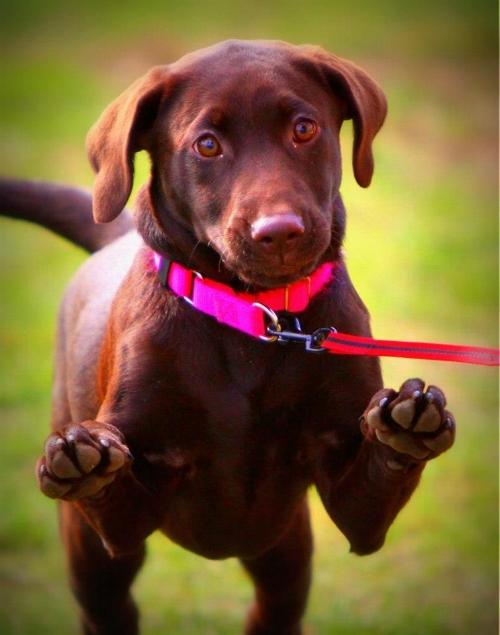
It isn’t that your dog isn’t smart, he is. What happens is we set our training sessions up with our dogs when we have their complete focus and little to no distractions. This isn’t bad, in fact it helps your dog learn those behaviors quickly. What it doesn’t do is teach your dog how to do those behaviors when things get a little distracting.
How To Play Crazy To Calm
It’s a fun little game where your goal is to amp up your puppy or dog with play to a 10 and then after they have gotten jazzed up you want to bring them back down to zero, calm. This game will help teach your dog impulse control, a solid sit, and a dog’s version of saying please.
Depending on the excitability of your pup you will want to build your dog up to a level where he can succeed at. Some dogs may only start at a 5 because that is hard enough for them while others might be able to start play at a 10. Spend 30 seconds or so playing with your dog. Jazz him up. Then stop, ask for a sit and reward once your dog sits. Have your dog maintain a sit. You can treat your dog every few seconds initially to help keep him in position. When you are ready to play again, use a release word such as Free Dog or Play On. Your dog will learn he must maintain a position until he is told otherwise. Sounds a bit like a stay doesn’t it? In fact you are teaching a default stay with this game as well.
Once you’ve played a few minutes give your dog a chance to offer the sit. Now we are looking for the say please portion of the game and also building an automatic sit for when you stop, handy for walking on leash. Encourage your dog to play with you like before but this time when you stop you are not prompting your dog for a sit, we want him to make the decision. Simply wait and then reward your dog once he does sit. He may be slow at first but should get quicker. Use your release cue and play again. With your dog offering the sit it is his way of saying please may I? Please may I go say hello to that person? Please may I go sniff that tree? Please may we play some more?
This game is teaching your dog how to get excited and then bring himself back down to a functioning level. If we start teaching our dogs how to do their behaviors when their energy level is up we are helping them for when bigger distractions occur. This game alone will not teach your dog how to focus in the presence of running children, other dogs, cats or people in general but it will help in conjunction with other foundation behaviors such as focus & leave-it.
Would love to hear how the game worked for you!